
Rental Dispute Cases in Dubai, UAE
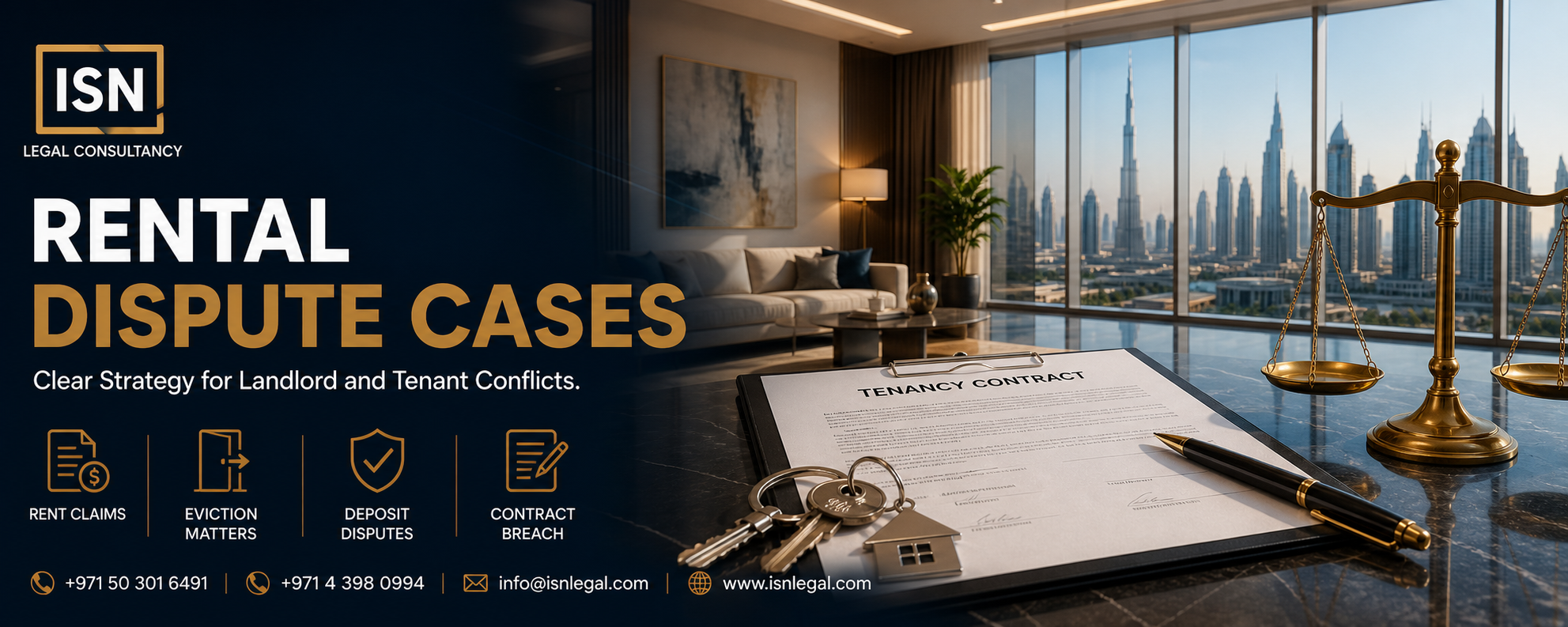
Rental Dispute Cases arise when disagreements between landlords and tenants cannot be resolved through direct negotiation and require formal legal resolution. In Dubai, rental disputes may concern residential or commercial properties and can involve unpaid rent, eviction, rent increases, lease renewal, termination, maintenance responsibilities, security deposits, property damage, or other alleged breaches of the tenancy agreement.
Dubai has a specialised judicial framework for resolving qualifying rental disputes through the Rental Disputes Center (RDC). The RDC was established under Decree No. (26) of 2013 and has jurisdiction over rental disputes falling within its statutory scope. Depending on the nature of the dispute, a matter may involve conciliation, formal proceedings, appeal where legally available, and enforcement of the resulting judgment.
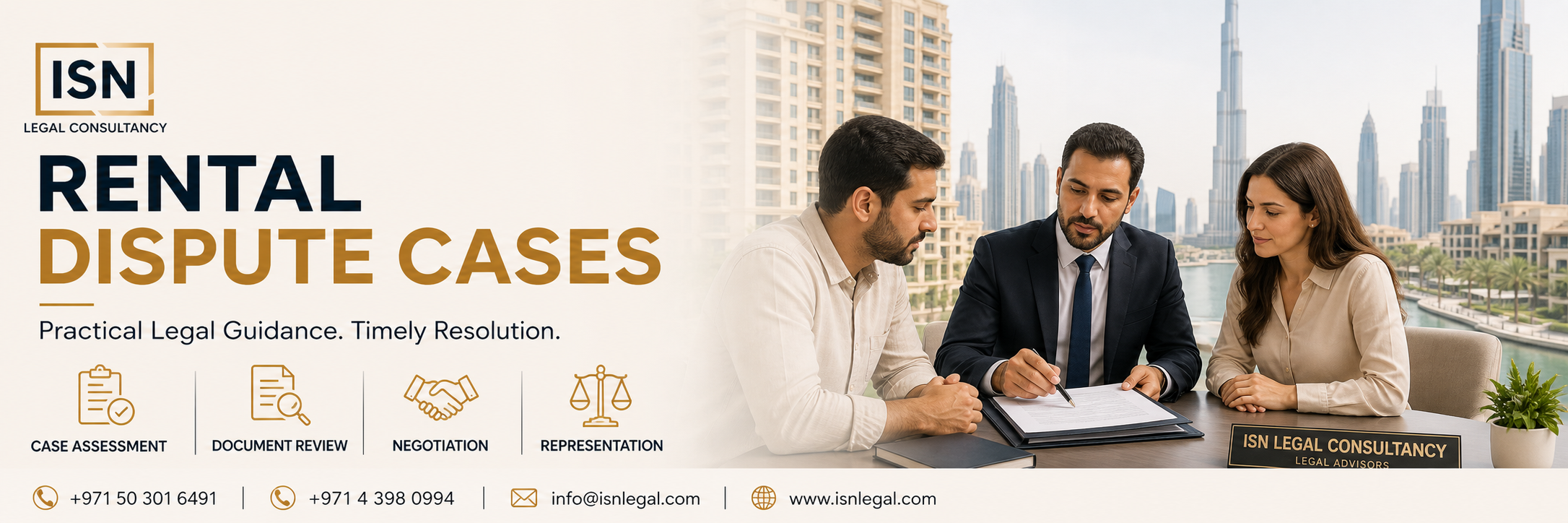
At ISN Legal Consultancy, we advise landlords, tenants, property owners, investors, and businesses on Rental Dispute Cases, helping clients understand their legal position, organise supporting evidence, assess potential claims or defences, and navigate the applicable dispute resolution procedures.
What Are Rental Dispute Cases?
Rental Dispute Cases are formal disputes arising from the legal relationship between a landlord and tenant concerning leased property.
A disagreement does not necessarily need to become a formal case. Many rental issues can be resolved through negotiation or settlement. However, where the parties cannot reach an agreement, one party may seek formal legal remedies through the competent authority.
Common Rental Dispute Cases may involve:
- Unpaid rent.
- Eviction.
- Rent increases.
- Lease renewal.
- Early termination.
- Security deposits.
- Maintenance and repairs.
- Property damage.
- Subleasing.
- Use of the property.
- Contractual breaches.
- Handover disputes.
For a broader overview of landlord and tenant disputes, see our Rental Dispute pillar page.
Legal Framework for Rental Dispute Cases in Dubai
Dubai rental relationships are principally governed by Law No. (26) of 2007 Regulating the Relationship between Landlords and Tenants in the Emirate of Dubai, as amended by Law No. (33) of 2008.
The legislation addresses important matters including the tenancy contract, rent, landlord and tenant obligations, maintenance, renewal, eviction, and other aspects of the rental relationship.
The Rental Disputes Center was subsequently established under Decree No. (26) of 2013 Concerning the Rental Disputes Center in the Emirate of Dubai.
The RDC has specialised jurisdiction over rental disputes within the scope established by the Decree, including qualifying disputes between landlords and tenants of real property situated in Dubai. The jurisdictional position should nevertheless be assessed for each case because statutory exclusions or particular legal arrangements may affect the competent forum.
What Are the Most Common Rental Dispute Cases in Dubai?
Rental disputes can arise at any stage of a tenancy, from the beginning of the contractual relationship through renewal, termination, and final handover.
Rental Dispute Cases Involving Unpaid Rent
A landlord may commence a claim where a tenant allegedly fails to pay rent in accordance with the tenancy agreement.
Important evidence may include:
- The tenancy contract.
- Ejari documentation.
- Rental payment schedules.
- Cheques or payment records.
- Bank records.
- Notices.
- Correspondence between the parties.
The tenant may also have a defence depending on the circumstances and the nature of the claim.
Both parties should therefore review the complete contractual and payment history rather than relying only on individual communications.
Rental Dispute Cases Involving Eviction
Eviction is one of the most significant categories of rental dispute.
Dubai tenancy legislation specifies circumstances in which a landlord may seek eviction and establishes requirements that may differ depending on the ground relied upon.
Potential disputes can concern:
- Non-payment of rent.
- Unauthorised subleasing.
- Improper use of the property.
- Breach of tenancy obligations.
- Particular grounds for recovering possession upon expiry of the tenancy.
- Compliance with applicable notice requirements.
An eviction notice should not be assessed in isolation. The legal ground, wording, method of notification, timing, tenancy documents, and subsequent conduct of the parties may all be relevant.
Landlords considering eviction and tenants who have received an eviction notice should therefore obtain advice on the specific circumstances before taking further action.
Rental Dispute Cases Involving Rent Increases
Landlords and tenants may disagree over whether a proposed rent increase is legally permissible.
A rental dispute may arise where:
- The tenant challenges the proposed increase.
- The landlord alleges entitlement to a higher rent.
- The parties disagree regarding applicable rental criteria.
- Proper notice is disputed.
- Renewal negotiations fail because of the proposed rent.
The applicable regulatory framework and the circumstances existing at the relevant time should be reviewed carefully.
Rent increase disputes are among the Rental Dispute Issues that may sometimes be resolved through negotiation before formal proceedings become necessary.
Lease Renewal Disputes
Disagreements may arise when a landlord and tenant cannot agree on renewal.
The dispute may concern:
- Whether the tenancy should continue.
- Proposed changes to rent.
- Changes to contractual terms.
- Notice periods.
- Communications regarding non-renewal.
- Existing eviction notices.
Written communications between the parties can become particularly important in renewal cases because they may demonstrate what was proposed, rejected, accepted, or notified.
Rental Dispute Cases Involving Early Termination
A tenant may wish to leave a property before the tenancy expires, or a landlord may allege that circumstances justify termination.
Early termination disputes often require close review of the tenancy agreement because contractual provisions can be important in determining the parties’ rights and financial obligations.
Issues may include:
- Early termination clauses.
- Contractual penalties.
- Notice requirements.
- Outstanding rent.
- Mutual termination agreements.
- Property handover.
- Security deposits.
Where the parties agree to terminate a lease early, recording the settlement clearly in writing can reduce the possibility of further disputes.
Rental Dispute Cases Involving Security Deposits
Security deposit disputes commonly arise after the tenant leaves the property.
A landlord may claim that deductions are necessary because of damage or outstanding obligations, while the tenant may seek the return of the deposit.
Relevant evidence may include:
- The tenancy contract.
- Proof of deposit payment.
- Move-in condition reports.
- Handover documents.
- Photographs or videos.
- Maintenance records.
- Repair invoices.
- Correspondence.
Dubai tenancy legislation addresses security deposits collected for maintenance purposes upon expiry of a tenancy, making the actual condition of the property and evidence supporting any claimed deductions important considerations.
Rental Dispute Cases Involving Maintenance and Repairs
Disagreements concerning maintenance can arise during both residential and commercial tenancies.
Questions may concern responsibility for:
- Structural repairs.
- Air-conditioning.
- Plumbing.
- Electrical systems.
- Routine maintenance.
- Damage caused by the tenant.
- Major repairs.
- Restoration of the property.
The tenancy agreement should be reviewed alongside the applicable law because contractual provisions may allocate particular maintenance responsibilities between the parties.
For business premises, these questions can become more complex. Our Commercial Property Lease Disputes page provides more focused guidance on commercial tenancy matters.
Rental Disputes Center in Dubai
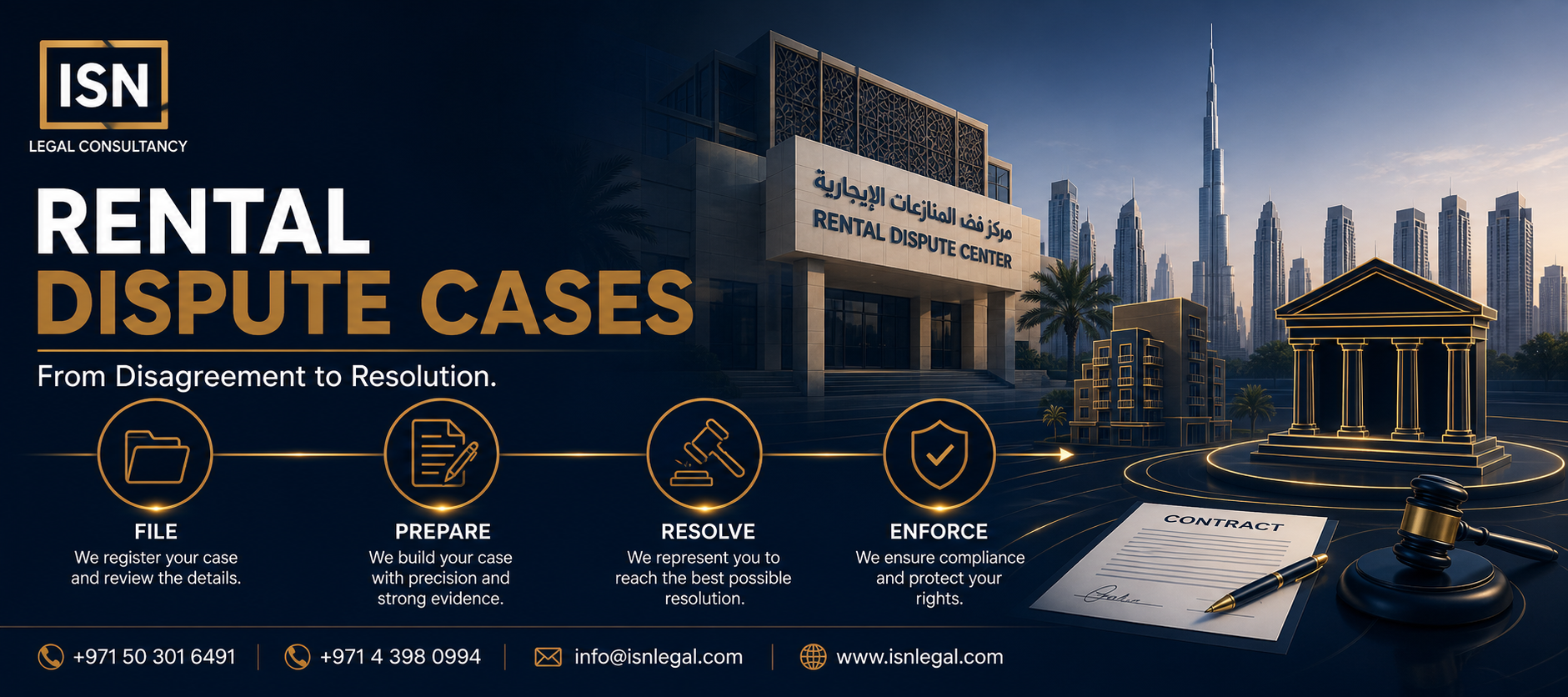
The Rental Disputes Center provides a specialised judicial system for resolving rental disputes within its jurisdiction.
Its framework includes mechanisms relating to:
- Conciliation.
- First-instance proceedings.
- Appeals where legally available.
- Provisional and summary matters.
- Enforcement of judgments.
Conciliation is particularly important because a dispute may potentially be resolved through settlement without proceeding through the full litigation process.
Where an amicable settlement is reached through the RDC‘s conciliation service, the agreement can be approved within the applicable legal framework and become enforceable.
Preparing a Rental Dispute Case
Preparation can have a significant effect on the presentation of a rental claim or defence.
A party should first identify:
- The legal relationship between the parties.
- The relevant tenancy provisions.
- The alleged breach.
- The remedy being requested.
- The notices that have been issued.
- The evidence supporting the claim or defence.
- The competent authority and correct procedure.
Starting proceedings without properly identifying the claim can result in unnecessary complications.
What Documents Are Required for a Rental Dispute Case in Dubai?
The exact documents depend on the type of case, but relevant documentation may include:
- The latest tenancy contract and Ejari documentation.
- Emirates ID documents for individuals.
- Commercial licence and relevant identification for companies.
- Notices and proof of service.
- Payment records.
- Cheques.
- Bank records.
- Correspondence.
- Maintenance records.
- Photographs.
- Property handover documents.
- Powers of attorney where applicable.
- Other evidence supporting the claim.
The RDC’s current service requirements also provide that documents submitted through its dispute services must be in Arabic or legally translated into Arabic where required.
Parties should check the current service requirements before filing because required documentation and administrative procedures can change.
Amicable Settlement Before a Rental Case
Formal adjudication is not always the only solution.
The RDC provides an amicable settlement service through which parties may attempt to resolve their rental disagreement within a legal framework before proceeding further with litigation.
Settlement may be particularly useful where the dispute concerns:
- Payment arrangements.
- Lease termination.
- Security deposits.
- Property handover.
- Outstanding obligations.
- Renewal terms.
A properly structured settlement can reduce the time, cost, and uncertainty associated with continued proceedings.
Filing a Rental Dispute
A claimant should ensure that the case is properly prepared before filing.
The current RDC service framework requires supporting documents appropriate to the claim and identifies specific requirements for certain cases, including eviction claims.
The claimant should clearly determine:
- Who the correct parties are.
- What legal remedy is sought.
- What amount is being claimed, if any.
- Which tenancy provisions are relevant.
- Which notices support the case.
- Which evidence establishes the alleged breach.
Our Rental Dispute Case Services
ISN Legal Consultancy assists landlords, tenants, property owners, investors, and businesses with Rental Dispute Cases.
Our services include:
- Reviewing tenancy agreements.
- Assessing rental claims and defences.
- Reviewing eviction notices.
- Advising on unpaid rent disputes.
- Advising on rent increase disputes.
- Reviewing renewal and termination matters.
- Assessing security deposit claims.
- Reviewing maintenance disputes.
- Organising supporting documentation.
- Advising on RDC procedures.
- Assisting with settlement strategies.
- Supporting clients throughout rental dispute proceedings.
Clients seeking assistance with an existing or anticipated case may also explore our Rental Dispute Lawyer page.
What Should You Do Before Filing a Rental Dispute Case?
Preparing the case properly before filing can help avoid procedural problems and make the dispute easier to assess.
Before starting formal proceedings, a landlord or tenant should consider:
- Reviewing the tenancy agreement and Ejari documentation.
- Identifying the exact issue in dispute.
- Determining the remedy being requested.
- Organising payment records and supporting evidence.
- Preserving notices, emails, messages, and other communications.
- Checking whether any formal notice was required.
- Recording property condition or damage where relevant.
- Confirming the correct parties to the dispute.
- Considering whether settlement remains possible.
A clear understanding of the claim and supporting evidence can help the party present its position more effectively.
Why Choose ISN Legal Consultancy?
Rental disputes can affect a person’s home, a business’s premises, investment income, property rights, and substantial financial obligations.
ISN Legal Consultancy approaches each dispute by reviewing the tenancy agreement, applicable legislation, notices, payment history, communications, and supporting evidence before recommending the appropriate strategy.
Whether the objective is reaching an amicable settlement, pursuing a claim, responding to proceedings, or enforcing legal rights, we provide practical guidance tailored to the circumstances of the rental dispute.
Related Legal Services
- Rental Dispute – Our main pillar covering rental disputes and landlord-tenant rights in Dubai.
- Commercial Property Lease Disputes – Guidance on disputes involving offices, shops, warehouses, and other commercial premises.
- Rental Dispute Issues – Guidance on common problems arising between landlords and tenants.
- Rental Dispute Lawyer – Legal assistance for landlords and tenants involved in rental disputes.
- Apartment Rental Disputes – Guidance on disputes specifically involving residential apartments.
More Rental Dispute Guides
Use these related guides to move directly to the part of the rental-dispute process that matches your situation:
- Rental Dispute — Start here for an overview of landlord and tenant rights, common problems, and the main UAE dispute-resolution options.
- Rental Dispute Center — Use this guide to understand the Dubai authority, filing route, case stages, and enforcement process.
- Rental Property Disputes — Read this for disputes about maintenance, deposits, property condition, renewal, and use of rented property.
- Commercial Rental Disputes — Explore this guide for business-tenancy issues affecting offices, shops, warehouses, and other premises.
- Dispute Rent Increase — Review this page when the main concern is a proposed rent adjustment, renewal terms, or the required notice.
- Commercial Property Lease Disputes — See this guide for complex lease terms, termination, fit-out, maintenance, and business-premises claims.
- Apartment Rental Disputes — Visit this page for residential problems involving repairs, deposits, eviction, renewal, or handover.
- Rental Dispute Issues — Use this guide to identify common landlord-tenant problems and the documents that may help resolve them.
- Rental Dispute Lawyer — See this page when you need tailored advice, document review, negotiation support, or representation.
Conclusion
Rental Dispute Cases in Dubai can involve unpaid rent, eviction, rent increases, renewal, termination, security deposits, maintenance obligations, and numerous other disagreements between landlords and tenants.
Understanding the tenancy agreement and applicable Dubai legislation is essential before commencing or defending formal proceedings. Proper notices, organised documentation, and a clearly defined claim or defence can be particularly important when a dispute reaches the Rental Disputes Center.
At ISN Legal Consultancy, we advise landlords, tenants, investors, property owners, and businesses on Rental Dispute Cases, helping clients understand their rights, prepare their evidence, assess settlement opportunities, and navigate the appropriate dispute resolution procedures.
Contact ISN Legal Consultancy
If you require legal advice regarding Rental Dispute Cases in Dubai, contact ISN Legal Consultancy. Our legal consultants can review your tenancy agreement, notices, payment records, and supporting evidence and advise you on the appropriate legal options for pursuing or defending a rental dispute.
